
More dark-sky trips get cut short by being unprepared for cold, dead batteries, or dew-fogged optics than by actual bad weather. A little planning around these predictable problems makes the difference between a miserable early retreat and a full night of comfortable observing.
Clothing: Colder Than You Expect
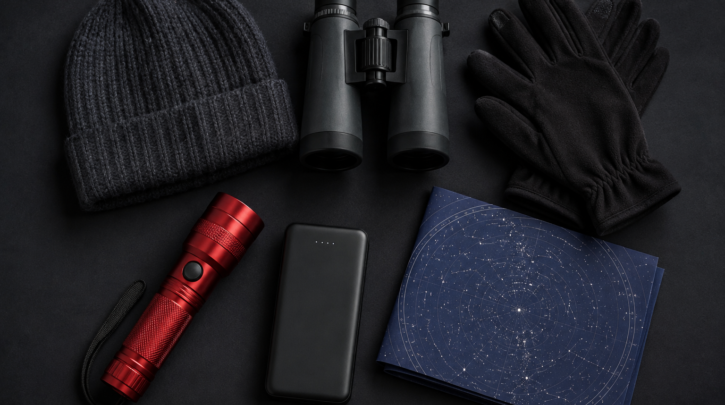
Open, remote sites — including deserts that were hot all day — routinely drop into genuinely cold nighttime temperatures, especially at higher elevation. Layering with a warm hat, gloves (thin enough to still operate a phone or eyepiece), and insulated boots matters more than most first-time dark-sky travelers expect, since you’ll be standing mostly still for hours rather than moving around to generate body heat.
Light: Red Only
A red flashlight or headlamp is essential, both for your own night vision and out of courtesy to anyone else observing nearby — white light, including an ordinary phone screen, ruins dark adaptation for everyone within sight, not just yourself; see our star party guide for how seriously this etiquette gets taken in group settings.
Seating and Comfort
A reclining chair or ground pad makes naked-eye and binocular observing far more comfortable than standing or craning your neck upward for extended periods, and a blanket or sleeping bag adds both warmth and a place to rest between observing sessions during a long night.
Power and Electronics
- Portable battery pack — cold drains phone and camera batteries considerably faster than normal use
- Offline star charts or planetarium app maps downloaded in advance, since remote sites often have no cell signal
- Spare batteries for any battery-powered equipment, including camera batteries kept warm in an inner pocket between uses
- A dedicated charging plan for a smart telescope, since these draw more power than a passive telescope or a pair of binoculars
Dealing With Dew
Dew forms readily on cold optics overnight, fogging lenses, eyepieces, and camera sensors and cutting a session short if it isn’t managed. A dew heater strap, wrapped around a telescope’s optical tube or lens, gently warms the glass just enough to prevent condensation, and simple lens caps or hoods help in milder conditions where a full dew heater isn’t necessary.
Charts and Backups
A paper planisphere or printed star chart is worth bringing as a no-battery backup even if you’re primarily using an app, since remote sites are exactly where a dead phone or no signal is most likely to be a real problem; see our star chart guide for using one in the field.
Food, Water, and Basic Safety
Bring more water and snacks than you think you’ll need, since remote dark-sky sites are often far from any store or restaurant once you’ve arrived. A basic first aid kit, a fully charged phone for emergencies despite the observing blackout on white light, and letting someone know your general plans and expected return time are sensible precautions for any trip to a remote, sparsely populated area.
Checking Permits and Access
Some dark-sky sites, particularly national parks and monuments, require reservations, entrance fees, or specific permits for overnight access or camping, and these requirements can change seasonally. Checking directly with the specific park or site well before a trip avoids arriving to find access restricted or a campground fully booked.
Equipment-Specific Packing
Beyond general gear, match what you bring to your actual observing plans — binoculars and a chair for casual naked-eye and binocular observing, a full telescope kit with eyepiece case and any tools needed for collimation if you’re bringing a reflector, or a smart telescope with its charging cable and a stable, low table or platform to set it on. Packing gear you won’t actually use adds bulk and weight without adding to the night’s actual results.
A Practical Pre-Trip Checklist
- Check moon phase and aim for dates near a new moon
- Check a clear-sky or astronomy-specific weather forecast in the days leading up to the trip
- Charge all batteries and pack chargers or battery packs
- Download offline maps and star charts before losing cell signal
- Confirm any park permits, reservations, or entrance requirements
- Pack layers for temperatures colder than the daytime forecast suggests
None of this preparation is complicated, but skipping it is the single biggest reason otherwise well-planned dark-sky trips end early.