
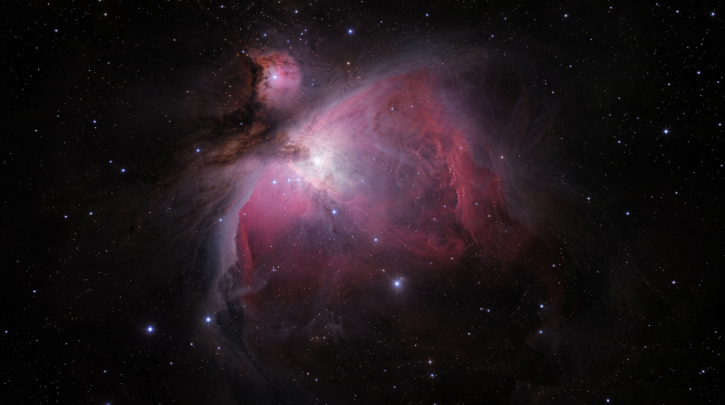

The Messier catalog — 110 numbered deep-sky objects, from M1 to M110 — was never meant to be a target list at all. Charles Messier, an 18th-century French comet hunter, catalogued these fuzzy, stationary objects specifically to avoid mistaking them for comets. The unintended result is the most useful beginner deep-sky observing list in amateur astronomy.
Why the List Exists
Messier was hunting comets, which appear as faint, fuzzy, moving objects against the background stars. Several fixed deep-sky objects — clusters, nebulae, galaxies — share that same faint, fuzzy appearance without actually moving, and Messier catalogued them precisely so he and other comet hunters could quickly rule them out and avoid a false alarm. That his “ignore these” list became one of astronomy’s most celebrated observing checklists is a genuinely good piece of irony.
Essential Beginner Targets
| Object | What It Is | How to See It |
|---|---|---|
| M42 (Orion Nebula) | Emission nebula | Naked eye as a fuzzy star in Orion’s sword; stunning in any telescope |
| M45 (Pleiades) | Open cluster | Naked eye as a small dipper-shaped cluster; best in binoculars |
| M31 (Andromeda Galaxy) | Spiral galaxy | Naked eye under dark skies as a faint oval smudge |
| M13 (Hercules Cluster) | Globular cluster | Needs binoculars or a telescope; a dense, bright ball of stars |
| M57 (Ring Nebula) | Planetary nebula | Small telescope shows a tiny gray ring or disk shape |
The Messier Marathon
Around the new moon in March, all 110 Messier objects happen to be positioned such that a dedicated observer can, in principle, observe every single one in a single night — an event called a Messier marathon. It’s a genuinely demanding, all-night undertaking pursued by serious amateur astronomers and astronomy clubs, but the underlying idea — that the whole catalog is observable across one calendar window each year — says a lot about how well-chosen and accessible the list actually is.
Building a Season Around the List
Rather than attempting a marathon, a more realistic approach for most observers is picking off a handful of Messier objects each session, working through the ones visible in the current season. This naturally builds familiarity with the sky and observing skill over a year or two, without requiring the all-night commitment of a full marathon attempt.
Numbers Don’t Reflect Difficulty or Interest
The Messier numbering follows the order Messier catalogued objects, not any ranking of brightness, difficulty, or visual interest — M1, the Crab Nebula supernova remnant, is actually one of the fainter and more challenging early entries, while some of the most rewarding beginner targets, like M42 and M45, sit elsewhere in the numbering. It’s worth using a curated beginner list rather than working through the catalog in strict numerical order.
Using the Catalog With a Smart Telescope
Many smart telescopes include the Messier catalog directly in their target selection app, letting you pick an object by name or number and have the telescope find and stack it automatically, without needing to star-hop manually; see our smart telescope guide for how that catalog-based workflow compares to traditional chart-based hunting.
Beyond Messier: The NGC Catalog
Once the Messier list feels familiar, the much larger New General Catalogue (NGC), with thousands of entries, offers a natural next step — fainter and more challenging, but a huge expansion on the relatively short Messier list once you’re ready for it; see our nebulae guide and Andromeda guide for two specific Messier targets worth mastering first.
Keeping Track of What You’ve Seen
A simple checklist — printed or in an app — marking off each Messier object as you observe it adds real motivation and a concrete sense of progress to a hobby that can otherwise feel open-ended. Many observers find that working through even half the catalog over a year or two builds genuinely broad, practical familiarity with the sky that’s hard to gain any other way.
Messier Objects Across the Seasons
Because Earth’s orbit changes which part of the sky is visible after dark through the year, different Messier objects come into good view in different seasons — winter favors the Orion Nebula and nearby clusters, spring and summer bring globular clusters and the galaxy-rich region toward the center of our own galaxy, and fall favors Andromeda and its neighbors. Working through the list roughly in season, rather than an arbitrary order, keeps each session’s targets conveniently placed high in the sky.
Following the sky’s own calendar this way turns the Messier list into a genuine year-round project rather than a single overwhelming checklist.