
Solar observation is the one branch of astronomy that happens in broad daylight — no dark sky, no late nights, just the Sun itself, viewed safely through dedicated equipment built specifically for the purpose. It’s also the branch where safety equipment isn’t optional in any way, on any session, regardless of experience level.
Why Solar Observation Is Different
Every other target on this site is safe to view with ordinary optics, sometimes even the naked eye. The Sun is the one exception — looking at it directly through any unfiltered telescope, binoculars, or with the naked eye causes immediate, severe, and potentially permanent eye damage. This isn’t a minor caution; it’s the single rule that governs everything else about this hobby; see our safe viewing guide before doing anything else described here.
White-Light Observation
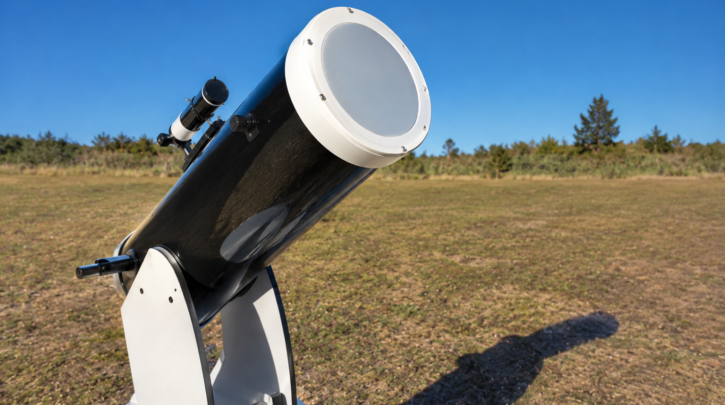
White-light solar observing uses a certified full-aperture filter over the front of a telescope, reducing the Sun’s intensity to a safe level while showing the visible surface, called the photosphere, largely as it appears to the naked eye through eclipse glasses — just magnified. This reveals sunspots and, under good conditions, the subtle mottled texture of granulation across the surface; see our sunspot viewing guide for what to look for specifically.
H-Alpha Observation
Hydrogen-alpha (H-alpha) observation uses a specialized telescope or filter tuned to one extremely narrow wavelength of light emitted by hydrogen, which reveals a completely different, far more dynamic layer of the Sun — prominences (arcs of glowing plasma extending off the edge of the disk), filaments (the same structures seen silhouetted against the disk), and sometimes solar flares in progress. Dedicated H-alpha telescopes are considerably more expensive than a simple white-light filter setup, but the view is dramatically more active and detailed.
The Solar Cycle
Solar activity rises and falls on a roughly 11-year cycle, and both sunspot count and prominence activity track closely with it — solar maximum brings frequent sunspots and dynamic H-alpha activity, while solar minimum can mean stretches of a largely blank, quiet disk with few or no visible spots at all. This is also the same underlying activity that drives aurora frequency, though on a much more immediately observable timescale through a solar telescope; see our aurora chasing guide for the connection between solar activity and the northern lights.
Best Conditions for Solar Observing
Unlike nighttime astronomy, moon phase and light pollution are irrelevant — the main variables are clear skies and steady atmospheric conditions. Observing when the Sun is higher in the sky, generally closer to local solar noon, means looking through less atmosphere than when it’s low near the horizon, which usually produces a sharper, steadier view, similar to how higher-altitude objects generally look better through a telescope at night; see our planetary telescope guide for the same atmospheric-seeing concept applied after dark.
A Great Fit for Outreach
Because it happens during the day, solar observation is one of the easiest ways to introduce astronomy to people who’d never attend a nighttime star party — schools, community events, and daytime public outreach sessions can all safely include a properly filtered telescope pointed at sunspots without asking anyone to stay up late or travel to a dark site.
Combining Solar Observation With Other Astronomy
Many observers keep a dedicated solar filter or H-alpha scope specifically as a daytime complement to their regular nighttime equipment, since the two activities require entirely different gear and techniques but share the same basic curiosity about the sky; see our solar filter guide for how to add solar capability to an existing setup.
Solar Flares and Space Weather Connection
Active sunspot regions can produce solar flares — sudden, intense bursts of radiation — and, especially during more active parts of the solar cycle, coronal mass ejections that can go on to trigger geomagnetic storms and aurora activity on Earth days later. Watching an active region through a solar telescope connects directly to the same space weather that aurora chasers track; see our aurora forecast guide for how that connection plays out from the other end.
What a First Session Looks Like
A first solar observing session is refreshingly simple: attach a properly inspected, certified full-aperture filter, point the telescope at the Sun using the filter’s own shadow on the ground to aim rather than looking through any finder scope, and focus on whatever sunspot activity happens to be visible that day. No dark sky, no waiting for nightfall, no cold — just a clear afternoon and the right equipment.
That simplicity is a big part of the appeal — solar observing rewards showing up prepared far more than it demands elaborate setup or specialized skill to get started.