
Deep-sky objects — everything beyond our own solar system, from star clusters to nebulae to entire galaxies — are the most rewarding and most demanding targets in amateur astronomy. They’re faint, they need real aperture and dark skies to show much detail, and the eyepiece view rarely matches the vivid color of a photograph. Understanding why, and what’s genuinely changed with smart telescopes, sets realistic expectations before you even head outside.
The Three Main Categories
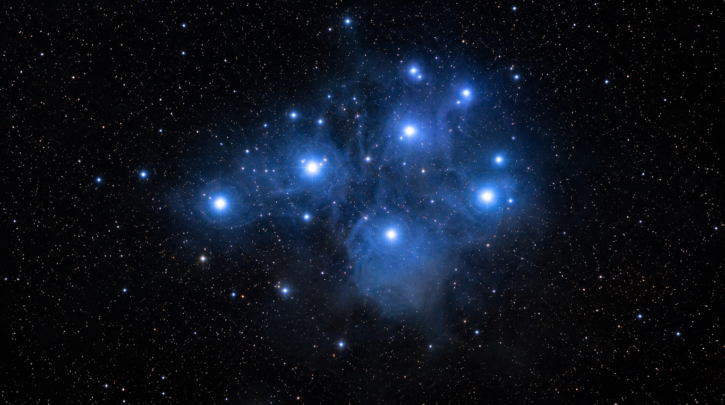
Open clusters are loose, young groups of stars that formed together, like the Pleiades — bright, easy, rewarding even in binoculars. Globular clusters are far older, densely packed spherical swarms of hundreds of thousands of stars, appearing as a bright, condensed ball through a telescope. Nebulae are clouds of gas and dust, in several distinct types with very different appearances and causes; see our nebulae guide for the breakdown. Galaxies are entire separate star systems, appearing as faint, extended smudges of light at the very edge of what amateur equipment can resolve.
Why Aperture Matters More Here Than Anywhere Else
Unlike planets, which are bright enough that focal length and sharpness matter as much as raw light-gathering, deep-sky objects are faint and extended, which makes aperture — the diameter of the main mirror or lens — the single most important spec. A larger aperture simply gathers more photons from a faint, spread-out object, which is why deep-sky enthusiasts often chase bigger telescopes above all else; see our galaxy telescope guide for how that plays out in practice.
Dark Skies Matter Even More
Light pollution devastates deep-sky viewing far more than it affects planets or the Moon, since these targets are already faint and any additional sky glow directly competes with and washes out their light. A modest telescope under a genuinely dark sky often outperforms a much larger telescope fighting suburban light pollution; see our light pollution guide and dark-sky destinations guide for how much this matters and where to go.
Averted Vision: A Free Technique
Looking slightly to the side of a faint object, rather than directly at it, shifts its light onto the more light-sensitive rod cells surrounding the center of your retina rather than the less sensitive cones used for direct, detailed vision. This technique, called averted vision, genuinely reveals fainter detail on dim deep-sky objects and costs nothing — it’s one of the first real skills worth practicing as a beginner deep-sky observer.
Realistic Expectations Through an Eyepiece
Most deep-sky objects appear as faint gray or slightly greenish smudges through a traditional eyepiece, not the vivid color seen in photographs — human night vision simply isn’t sensitive enough to perceive color at these light levels, regardless of aperture. This is normal and not a sign of inadequate equipment; photographs achieve their color and detail through long exposures and processing that a live eyepiece view can’t replicate on its own.
How Smart Telescopes Change This Specifically
This is exactly where smart telescopes make their biggest difference. Live image stacking approximates what a long-exposure photograph achieves, in real time, on a phone or tablet screen — revealing color and structure in galaxies and nebulae that a traditional eyepiece view of the same object, through the same aperture, simply cannot show. For deep-sky observing specifically, this isn’t a minor convenience; it’s arguably the single biggest capability gap between traditional and smart telescopes in this entire site.
See deep-sky detail a traditional eyepiece can’t show View Unistellar smart telescopes
A Good Starting List
The Messier catalog — a list of about 110 bright deep-sky objects compiled in the 18th century — remains the standard beginner target list, since every object on it is bright enough to be a realistic goal with modest equipment; see our Messier objects guide for where to start.
Star Clusters as an Easier Entry Point
If galaxies and nebulae feel intimidating at first, star clusters are a gentler starting point — the Pleiades and the Hercules Cluster are both bright, immediately rewarding, and forgiving of imperfect skies or modest equipment, which makes them good confidence-builders before tackling fainter targets.
Building Toward Fainter Targets
Deep-sky observing rewards a gradual progression: bright open clusters and the Orion Nebula first, then brighter globular clusters and Andromeda, then fainter galaxies and nebulae as your eyes, technique, and equipment improve. Jumping straight to the faintest targets on a first session, without this progression, is a common way beginners get discouraged before they’ve built the averted-vision skill and patience the hobby rewards.
Each successful find, even a faint one, builds the pattern-recognition and patience that makes the next target easier — deep-sky observing compounds in a way that rewards sticking with it.