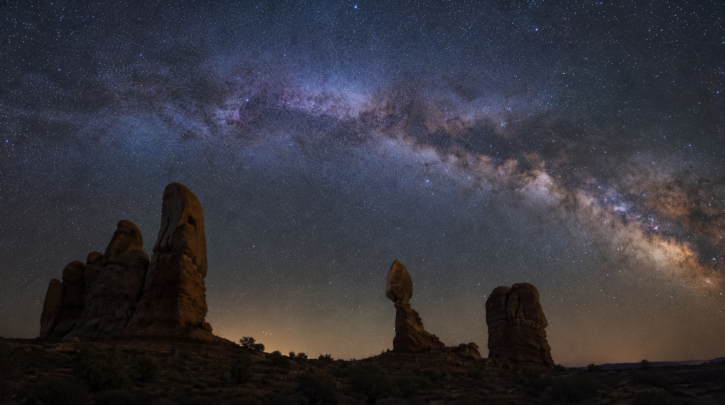

A genuinely dark sky is worth traveling for — the difference between a typical suburban view and a certified Dark Sky Park is closer to night and day than most people expect, revealing the Milky Way, faint nebulae, and far more stars than any backyard ever could.
What Makes a Sky Dark
The core factors are distance from artificial light sources, low population density in the surrounding region, and often elevation, since less atmosphere and moisture sit above a higher-altitude site to scatter light and blur fine detail. These factors combine differently at each notable dark-sky location, but the common thread is simply being far from the light domes that cities and towns cast for many miles; see our Bortle scale guide for how sky darkness actually gets measured and compared.
Dark Sky Certifications
DarkSky International (formerly the International Dark-Sky Association) certifies locations across several tiers: Dark Sky Parks, larger Dark Sky Reserves, the most pristine Dark Sky Sanctuaries, and Urban Night Sky Places recognizing meaningful light-pollution efforts even within developed areas. These certifications require a genuine, measured level of sky darkness and active outdoor lighting management, which makes a certified location a reliable bet rather than just a marketing label.
Notable Dark-Sky Regions
The Colorado Plateau, spanning parts of Utah, Arizona, Colorado, and New Mexico, hosts an unusually dense cluster of certified dark-sky parks, including Natural Bridges National Monument in Utah, the first location in the world ever certified as a Dark Sky Park. Big Bend National Park in far west Texas is regularly cited as one of the darkest measured skies in the continental US, thanks to its remote location far from any major city. Cherry Springs State Park in Pennsylvania is a notable exception to the usual pattern — a genuinely dark sky within a reasonable drive of the densely populated Northeast corridor, which makes it disproportionately popular for East Coast stargazers.
Other Well-Known Sites
Great Basin National Park in Nevada and Death Valley National Park along the California-Nevada border both combine remote desert location with high elevation in places, producing exceptionally dark and steady skies. Chaco Culture National Historical Park in New Mexico pairs dark skies with genuine archaeological and cultural significance, since its ancient structures show deliberate astronomical alignments. Across the country, dozens of additional certified parks and reserves offer a similar experience closer to specific regions — checking DarkSky International’s official list for the nearest certified site to your own location is more useful than relying on a short list of the most famous names.
Planning Around the Moon and Weather
Even the darkest certified site is washed out by a bright moon, so planning a trip around the new moon phase matters as much as choosing the location itself. Checking a clear-sky weather forecast specifically — cloud cover forecasts built for astronomers, not just general weather apps — and building a little flexibility into travel dates meaningfully improves the odds of an actually clear night once you arrive; see our packing list guide for preparing for the trip itself.
Elevation and Seeing
Beyond overall sky darkness, higher-elevation sites often benefit from steadier atmospheric conditions (better “seeing”), which particularly helps planetary and high-magnification observing on top of the darker skies benefiting deep-sky targets; see our planetary telescope guide for why steady air matters so much at high magnification.
Combining a Trip With a Star Party
Many of the best-known dark-sky destinations also host organized star parties, which add a genuinely social dimension and a chance to look through telescopes far larger and more specialized than most individual travelers would bring themselves; see our star party guide for what to expect at one and how to find one near a planned trip.
Dark-Sky Travel Beyond the US
The certification system and the underlying appeal of dark skies aren’t unique to the United States — similar Dark Sky Reserves and Sanctuaries exist across Canada, parts of Europe, Chile’s Atacama Desert region, and elsewhere, often in equally remote and starkly beautiful landscapes. For travelers willing to go farther afield, some of the very darkest measured skies on Earth are found outside US borders entirely, particularly in high, dry, sparsely populated regions like the Atacama.
Making the Most of a Single Trip
Since a dedicated dark-sky trip represents real travel time and cost, planning to make the most of it pays off — checking a destination’s Bortle class in advance, packing appropriately for the specific climate and elevation, and building in a backup night or two in case of clouds all increase the odds the trip actually delivers a genuinely dark, clear sky rather than a wasted drive; see our packing list guide for the full preparation checklist.