
Every method of viewing the Sun safely comes back to the same core principle: never let unfiltered sunlight reach your eye, whether directly or through any optical instrument, on any day — not just during an eclipse. This reference covers the safe methods for routine solar observing sessions, the same rules that also apply on eclipse day.
The Core Rule, Restated
Direct, unfiltered sunlight is bright enough to cause immediate, severe eye damage in seconds, regardless of the day, the season, or how the Sun happens to look. This applies every single time you view the Sun, not only during the rare eclipse events covered in our eclipse safety guide — routine solar observing carries exactly the same risk and demands exactly the same precautions on an ordinary clear day.
Certified Eclipse Glasses for Naked-Eye Viewing
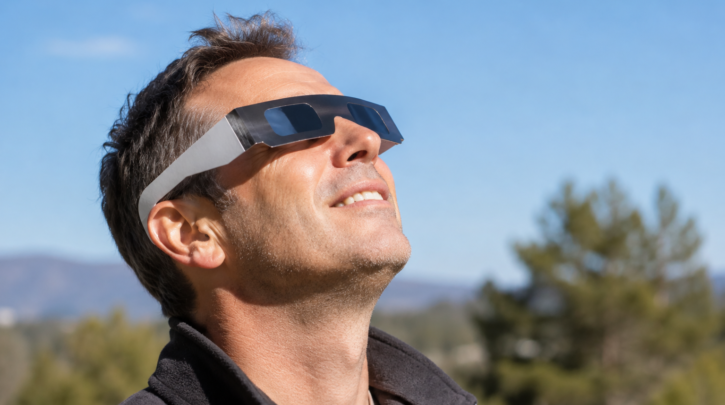
For any naked-eye look at the Sun, glasses meeting the ISO 12312-2 international safety standard are required — the same certified glasses used for eclipse viewing work identically well for a casual naked-eye check of the Sun on any ordinary day, and they should be inspected for damage before every single use, not just the first time.
Full-Aperture Filters for Optics
Any telescope or binoculars used to view the Sun needs a certified filter covering the entire front aperture, never a filter at the eyepiece end, which can crack from concentrated heat; see our solar filter guide for the specific filter types and how to choose between them.
Projection Methods
Pinhole projection — passing sunlight through a small hole onto a card or the ground — and telescope or binocular projection onto a white card are both completely safe indirect methods, since no one looks directly at the Sun or through an eyepiece at any point. These methods are particularly useful for groups, classrooms, and outreach events where providing individual certified glasses or filtered eyepieces for everyone isn’t practical; see our sunspot viewing guide for using projection to share sunspot views with a group.
What’s Never Safe
- Looking at the Sun with the naked eye, with or without ordinary sunglasses
- Looking through any unfiltered telescope, binoculars, or camera viewfinder
- Using a filter at the eyepiece end of a telescope rather than the front
- Using homemade filters — smoked glass, film negatives, or stacked sunglasses
- Using scratched, punctured, or otherwise damaged certified filters or glasses
Setting Up a Safe Routine Session
Before every solar session, whether it’s a quick sunspot check or a longer planned observation, inspect all filters and glasses for damage, secure any full-aperture filter firmly against wind, and brief anyone joining you, especially children, on the rules before pointing anything at the Sun. Treating this inspection as a fixed part of the routine, every time, removes any chance of skipping it on a day when it happens to feel unnecessary.
Why This Matters More for Routine Observing
Eclipse safety gets wide public attention because of dedicated news coverage in the lead-up to major events, but the exact same risks apply every time you point a telescope at the ordinary, non-eclipsed Sun — an unfiltered telescope is exactly as dangerous on a random Tuesday afternoon as it would be during a partial eclipse. Building consistent safety habits for routine solar observing is, if anything, more important than eclipse-specific caution, simply because routine sessions happen far more often and are more likely to become complacent over time.
Finder Scopes and Secondary Optics
Beyond the main telescope, any attached finder scope needs its own cap or removal before a solar session, since it isn’t covered by a filter on the main optical tube and remains fully capable of causing eye damage if left uncapped and pointed at the Sun. Aiming a solar-filtered telescope using its own shadow on the ground, rather than an unfiltered finder, avoids this commonly overlooked risk entirely.
Teaching Others Safely
Anyone bringing others into solar observing — family, a classroom, a public outreach session — carries some responsibility for making sure every participant genuinely understands and follows these rules, not just hears them once in passing. Demonstrating the correct technique yourself first, then watching each new participant’s first look to confirm they’re following the rules correctly, catches misunderstandings before they become a real problem.
Get the safety habit right once, and everything else about solar observing — sunspots, prominences, the slow turning of the Sun itself — is simply there to enjoy.